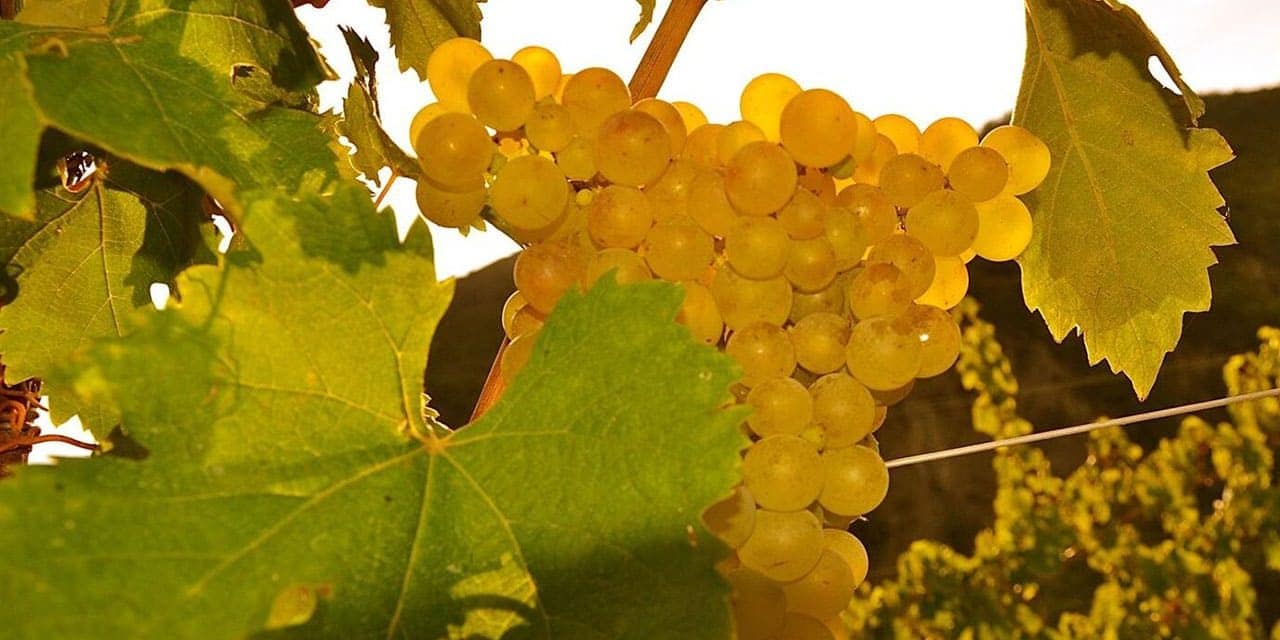
A friend of mine asked me the other night about Italian white wines. He was deeply confused by the sheer volume of choices, which is perfectly natural. It is conservatively estimated that Italy cultivates between 350 and 600 native varieties. For reference, 350 represents one-quarter of all the cultivated grape varieties in the world, and more grapes that France and Spain combined. And the Italians have not helped themselves by burying the varietal make-up of many of their wines behind a location-based appellation name.
As I considered how to answer him, I went through a mental checklist of my favorite Italian white grapes. I quickly realized that many of the grapes on my list were varieties I think of as “orphans.” It’s not a perfect term, but I use it to mean indigenous grapes that were on the verge of extinction until saved by a passionate (or stubborn) farmer or winemaker. That led me to write this article, which morphed into something more closely resembling a book chapter.
So, if you’re interested in learning about the conditions that led Italy to the edge of viticultural genocide and how it was brought back from the brink (at least with respect to some varieties), read on. On the other hand, if you only want my recommendations on a few exciting Italian whites, here are the highlights (in the order in which they jumped into my head):
Varietal: Timorasso
Top Recommendation: Vigneti Massa – Costa del Vento, Sterpi, Montecitorio. These are spectacular “cru” wines from single vineyards showing great individual expression. Massa’s Derthona is a multi-vineyard blend from vineyards across the northern part of the Colli Tortonesi appellation. It is an excellent demonstration of what the grape and the terroir are capable of.
Varietal: Pecorino
Top Recommendation: Tenuta Cocci Grifoni – Guido Cocci Grifoni, Colle Vecchio. Grifoni is credited with saving Pecorino. 2024 has been talked about as a great vintage.
Varietal: Albana
Top Recommendation: Fattoria Zerbina – Dry: Bianco di Ceparano, Sweet: Scacco Matto. The estate that redefined Albana; the benchmark for both dry and sweet expressions.
Varietal: Fiano
Top Recommendation: Mastroberardino – Radici Fiano di Avellino. The foundational modern Fiano; the wine that proved the grape’s greatness. Mastroberardino’s Stilèma Fiano di Avellino Riserva is an ageable wine made in an older style from superior sites.
The Historical Forces That Nearly Erased Italy’s Native White Grapes
In the decades following World War II, Italy’s agricultural priorities were shaped by urgency, scarcity and the need for rapid economic recovery. The country emerged from the war with devastated farmland, a fragile economy and a population that needed affordable calories more than artisanal products. Wine, long a staple of daily life, became an industrial commodity. Government policy encouraged the planting of high‑yielding, easy‑to‑grow varieties: Trebbiano Toscano, Malvasia Bianca, Sangiovese and other prolific workhorses that could produce oceans of inexpensive vino sfuso. The goal was volume, not character. In this environment, countless indigenous grapes that were low‑yielding, late‑ripening, disease‑prone or simply unfamiliar were ripped out and replaced with varieties that could reliably fill tanks and satisfy a nation rebuilding itself.
By the 1960s, however, Italy was changing. The postwar economic miracle had created a new middle class with disposable income and evolving tastes. Italians began traveling, dining out and seeking wines that expressed quality rather than quantity. This shift coincided with the emergence of visionary producers who believed that Italy’s future lay not in anonymous bulk wine but in distinctive regional identity. On the white wine front, Mario Schiopetto in Friuli became a pivotal figure. His insistence on cleanliness, temperature control and precision — techniques then considered radical — helped ignite Italy’s white wine renaissance. Suddenly, consumers and producers alike were paying attention to aromatics, texture and terroir. The idea that Italy’s native grapes could produce world‑class wines was no longer a romantic notion; it was a technical and commercial possibility.
Italy’s entry into the European Economic Community (later the EU) in 1957 and the deepening integration that followed added another layer of complexity. EU agricultural policy brought investment, modern equipment and scientific expertise, but it also introduced incentives that unintentionally accelerated the disappearance of heritage vineyards. The infamous vine‑pull programs of the 1970s and 1980s offered financial rewards for uprooting old, unproductive vines and replanting with varieties deemed economically advantageous. Bureaucratic efficiency favored uniformity. Ancient field blends, obscure local cultivars and fragile old vines were liabilities in a system designed to streamline agriculture. Many growers, facing economic pressure, complied. Entire genetic lineages teetered on the edge of extinction.
Yet this same period also produced a counter‑movement, small, stubborn and profoundly influential. A handful of producers began questioning what was being lost. They walked abandoned terraces, tasted grapes from forgotten parcels and listened to elderly farmers who remembered wines that no longer existed. These winemakers were not motivated by nostalgia alone; they believed that Italy’s future greatness depended on reclaiming its past. Their work was often lonely and financially risky. Reviving a nearly extinct grape meant years of experimentation, bureaucratic battles and the possibility that consumers might never care. But they persisted.
As early as the 1950s in Campania, Antonio Mastroberardino took actions to safeguard Fiano, Greco, Aglianico and other ancient varieties through meticulous clonal selection and historical research. He persuaded local growers to continue growing native varieties and paid them a higher price for these grapes. Others followed his lead. By the late 1980s and early 1990s, their efforts began to bear fruit, literally and figuratively. Walter Massa in Piedmont championed Timorasso when no one else believed in it. Guido Cocci Grifoni in the Marche rescued Pecorino from obscurity and proved its potential. These individuals and others like them did more than save grapes; they reshaped Italy’s wine identity. Their work laid the foundation for the modern revival of native varieties, a movement that today defines Italy’s most exciting wines.
I’m not going to do a complete survey of indigenous Italian grapes saved from extinction by these giants. The list is surprisingly long. I’m going to focus on four grapes I really like that I think you may want to try.
Timorasso
Timorasso is one of the most dramatic resurrection stories in Italian wine: a grape that hovered on the brink of extinction until a single producer refused to let it die. Native to the Colli Tortonesi in southeastern Piedmont, Timorasso was once widely planted in the hills around Tortona. Historical records from the 19th century describe it as a prized local white capable of producing wines of surprising longevity. But its virtues were overshadowed by its vices: Timorasso was notoriously difficult in the vineyard, prone to millerandage, sensitive to disease and maddeningly inconsistent in yield. As postwar Italy shifted toward high‑volume production, growers abandoned it in favor of Cortese and other reliable workhorses. By the 1970s, Timorasso had all but vanished, surviving only in scattered, elderly vines tended by farmers too stubborn (or too sentimental) to pull them out.
The man who changed everything was Walter Massa, a young winemaker from Monleale who saw potential where others saw only trouble. In the 1980s, Massa began experimenting with the few remaining Timorasso vines, convinced that the grape’s natural concentration, acidity and mineral depth could produce a world‑class white. His neighbors thought he was wasting his time. The local cooperative refused to buy his grapes. Even the regional authorities were skeptical, questioning why anyone would bother with a grape that had already been “naturally selected” out of existence. But Massa persisted, replanting old parcels, conducting clonal research, and vinifying Timorasso with a seriousness no one had ever applied to it. By the mid‑1990s, he released the first modern bottlings of Derthona, the historical name he revived to signal a new identity for the grape and the territory.
I am a huge fan of Massa’s single-vineyard Timorassos. I visited his winery in late 2025. Walter was in the fields working, but I spent a few hours with his nephew, Filippo, a charming young man who will no doubt play a meaningful role in the future of Vigneti Massa. I deeply appreciated his hospitality and willingness to answer all my questions about things such as the impact of climate change on harvest schedules. He ran me through the entire line of their wines. I was not surprised to confirm my love of his Timorassos; what surprised me was how much I appreciated his red wines.
In the vineyard, Timorasso remains a demanding partner. It ripens late, requires meticulous canopy management and punishes growers who underestimate its sensitivity to weather. Yields are naturally low, and the grape’s thick skins and compact clusters make it susceptible to rot if not handled carefully. Yet these same traits give Timorasso its power. The berries accumulate remarkable dry extract and the grape retains acidity even in warm vintages. It is, in many ways, a white grape with red‑wine structure: dense, textural and built for aging. This combination of challenges and rewards explains why Timorasso disappeared in an era obsessed with efficiency, and why its revival required someone willing to embrace complexity rather than avoid it.
In the glass, Timorasso is unmistakable. Young versions show notes of pear, quince, chamomile, honey, and white peach, often wrapped in a firm mineral core. With time, the wine evolves dramatically, developing aromas of beeswax, lanolin, toasted nuts and wild herbs, along with a deep, almost tannic grip on the palate. It can age for decades, gaining weight and savory complexity while maintaining its acidity. The best examples rival great white wines from anywhere: Chablis in their minerality, Rhône whites in their texture, and German Riesling in their longevity, yet they remain distinctly Piedmontese, shaped by limestone soils and the region’s cool nights.
Today, Timorasso is no longer a curiosity but a rising star. Dozens of producers in the Colli Tortonesi have embraced the grape, and the Derthona name has become a regional banner. (I predict it will one day be the name of a Timorasso-based appellation.) What was once nearly extinct is now one of Italy’s most compelling white wines, thanks to the stubborn vision of Walter Massa.
Primary appellation:
- Colli Tortonesi DOC (increasingly labeled Derthona as a geographic designation)
Top producers & benchmark wines:
- Vigneti Massa – Derthona, Costa del Vento, Sterpi, Montecitorio. The reference point; Massa’s crus define the modern Timorasso style.
- La Colombera – Derthona, Il Montino. Precise, mineral-driven expressions from one of the earliest adopters after Massa. (The white wine I served at my recent birthday party.)
- Vigneti Repetto – Derthona, Origo, Quadro. Structured, age worthy wines that highlight limestone intensity.
Additional notable estates: Luigi Boveri, Vigne Marina Coppi.
Pecorino
Few Italian white grapes illustrate the fragility of agricultural memory as vividly as Pecorino, a variety native to the rugged Apennine slopes of the Marche and Abruzzo. For centuries, Pecorino was a mountain farmer’s grape: early‑ripening, naturally high in acidity and capable of producing concentrated wines even in cool, marginal sites. Its name likely derives from the flocks of sheep (pecore) that grazed the same high pastures where the grape thrived. But by the mid‑20th century, Pecorino had nearly vanished. It was too low‑yielding for the postwar push toward industrial wine production, too difficult to manage in the vineyard and too obscure to command a market. As Italy modernized, Pecorino’s tiny, sugar‑rich berries were dismissed as uneconomical, and the grape was replaced by Trebbiano, Passerina and other reliable producers. By the 1970s, Pecorino survived only in a few scattered vines tended by elderly farmers who remembered its virtues but had no commercial reason to preserve it.
The turning point came in the early 1980s, when Guido Cocci Grifoni, a visionary producer in the southern Marche, began searching for native varieties that could express the region’s identity more vividly than the standard whites of the era. During his research, he encountered references to Pecorino in old agricultural texts and heard stories from local farmers about a grape that once produced wines of remarkable perfume and structure. Intrigued, he tracked down a handful of surviving vines in the mountains near Arquata del Tronto, gnarled, neglected and barely clinging to life. Cocci Grifoni took cuttings, propagated them and began experimenting. The results were immediate and astonishing: Pecorino produced musts with high natural acidity, elevated sugar levels and an aromatic complexity that stood out from anything else in the region. In 1990, he released the first modern commercial bottling of Pecorino, effectively reintroducing the grape to Italy.
In the vineyard, Pecorino is a study in contrasts. It ripens early — often weeks ahead of other local whites — yet retains striking acidity. Its clusters are small and compact, with berries that accumulate sugar rapidly, making it possible to achieve both freshness and richness without excessive alcohol. The grape thrives in high-altitude sites, where cool nights preserve aromatics and structure. But Pecorino is not an easy partner; yields are naturally low, and the grape demands careful canopy management to avoid sunburn and maintain balance. These challenges explain why Pecorino disappeared during the era of high-volume production, but they also explain its modern appeal. In a world increasingly focused on authenticity and terroir expression, Pecorino’s natural concentration and tension make it a winemaker’s dream.
In the glass, Pecorino is unmistakably expressive. Young wines burst with pear, green apple, lemon zest, wild herbs and white flowers, often accompanied by a saline edge. The palate is both generous and full-bodied, with a distinctive combination of richness and acidity. As Pecorino ages, it develops notes of honey, chamomile, fennel and dried apricot, gaining weight and complexity without losing its backbone. The best examples show a mineral drive and structural firmness that make Pecorino one of Italy’s most compelling modern whites.
Today, Pecorino is one of the great success stories of Italy’s native grape revival. Plantings have expanded dramatically in both the Marche and in neighboring regions of Abruzzo, and the grape has become a flagship for producers seeking to express the character of the Apennines. Yet its modern popularity should not obscure the fact that Pecorino’s survival hinged on the curiosity and persistence of a single producer. Guido Cocci Grifoni didn’t just rescue a grape; he restored a piece of regional identity and helped redefine what central Italy’s white wines could be.
Primary appellations:
- Offida DOCG (Marche) – the spiritual home of modern Pecorino
- Abruzzo DOC / Terre di Chieti IGT (Abruzzo) – where the grape has flourished since the 1990s
Top producers & benchmark wines:
- Cocci Grifoni – Guido Cocci Grifoni, Colle Vecchio. The original modern Pecorino; still one of the most refined and terroir‑driven.
- Cataldi Madonna – Frontone, Giulia. Abruzzo’s leading interpretation, mountain freshness with depth and tension.
- Tiberio – Pecorino. Laser‑focused, mineral and aromatic; among the most critically acclaimed today.
Additional notable estates: Velenosi (Offida), Emidio Pepe (Abruzzo), Torre dei Beati (Abruzzo).
Albana
Albana is one of Italy’s oldest documented white grapes. It is so old, in fact, that its origins blur into legend. Medieval texts praise it, Renaissance poets celebrated it and local lore tells of Galla Placidia, daughter of the Roman emperor Theodosius, tasting Albana in a village near Bertinoro and declaring that such a noble wine should be drunk from gold. Yet despite this illustrious past, Albana entered the 20th century in steep decline. The grape was widely planted across Romagna, but almost always for bulk production. Its natural richness and tannic grip were diluted by high yields, overcropping and industrial winemaking. By the 1970s and 1980s, Albana’s reputation had fallen so far that its ancient nobility was nearly forgotten. It was seen as rustic, heavy, and outdated: an old-fashioned wine for an era that wanted freshness and simplicity.
The grape’s salvation came not from nostalgia but from a producer who believed Albana had untapped greatness. Cristina Geminiani of Fattoria Zerbina, beginning in the late 1980s, approached Albana with a seriousness no one had applied to it in modern times. She recognized that Albana’s problems were not inherent to the grape but to the way it had been farmed and vinified. Geminiani lowered yields dramatically, conducted clonal research and explored the grape’s potential across different harvest dates and vinification styles. Most importantly, she embraced Albana’s natural tannic structure and phenolic richness (traits that had been treated as flaws) and reframed them as assets. Her work revealed Albana’s ability to produce not only fresh, mineral-driven whites but also profound late-harvest and passito (i.e., from partially dried grapes) wines capable of rivaling the great sweet wines of Europe.
In the vineyard, Albana is vigorous and adaptable, thriving in the warm, rolling hills of Romagna. It ripens relatively early but accumulates significant phenolic material, giving the grape a tactile presence unusual for Italian whites. Albana’s skins are thick, contributing both tannin and aromatic depth, and the grape responds dramatically to site and farming choices. High yields produce simple wines, but low yields unlock concentration, spice and structure. Albana is also naturally suited to appassimento (air drying) and botrytis (noble rot), making it one of the few Italian whites that can excel across a full stylistic spectrum, from crisp and dry to lusciously sweet. This versatility is precisely what made Albana misunderstood for decades and what makes it thrilling today.
I tasted Albana in a wonderful restaurant in Bologna. In the glass, it showed apricot, yellow plum, chamomile, almond and wild herbs, supported by a firm mineral spine and a subtle tannic grip. The palate was textured and authoritative. It is said that with time, Albana develops notes of honey, dried flowers, saffron, and toasted nuts, gaining complexity without losing freshness. In passito form, Albana becomes something else entirely: rich, golden and deeply aromatic, with flavors of candied citrus, apricot jam, acacia honey and spice, balanced by acidity that keeps the wine vibrant rather than heavy. These wines can age for decades, evolving into expressions that feel both ancient and timeless.
Albana’s revival is inseparable from Cristina Geminiani’s work. Her insistence on quality, her willingness to challenge assumptions and her belief in Albana’s inherent nobility transformed the grape’s reputation. In 1987, Albana became Italy’s first white wine to receive DOCG status, a symbolic recognition of its historical importance. But its true renaissance began only when producers like Geminiani demonstrated what Albana could be when treated with respect. Today, Albana stands as one of Italy’s most distinctive white grapes, a bridge between the country’s ancient viticultural heritage and its modern pursuit of authenticity.
Primary appellation:
- Romagna Albana DOCG – Italy’s first white DOCG (1987), covering dry, late‑harvest, and passito styles
Top producers & benchmark wines:
- Fattoria Zerbina (Cristina Geminiani) – Dry: Bianco di Ceparano, Sweet: AR Riserva, Scacco Matto. The estate that redefined Albana; benchmark for both dry and sweet expressions.
- Celli – I Croppi. A balanced Albana with a focus on purity and terroir.
- Fattoria Monticino Rosso – Secco Codronchio. Complex and intriguing.
Additional notable estates: Branchini, Gallegati, Tre Monti.
Fiano
Among Italy’s native white grapes, Fiano stands apart for its antiquity, its nobility and the remarkable precision with which it was saved. Long before modern viticulture, Fiano was celebrated in Roman texts and medieval chronicles, prized for its aromatic intensity and ability to produce wines of unusual longevity. It thrived in the volcanic hills of Irpinia, where cool nights and mineral‑rich soils shaped its character. But by the mid‑20th century, Fiano had slipped into obscurity. Industrial agriculture favored high‑yielding varieties, and Fiano—naturally low‑yielding, late‑ripening, and demanding in the vineyard—was steadily replaced by more productive grapes. By the 1960s, only a handful of old vines remained scattered across Avellino’s hillsides, their potential largely forgotten.
The revival of Fiano is inseparable from the work of Antonio Mastroberardino, one of the most influential figures in modern Italian wine. In the 1950s and 1960s, while much of Italy was uprooting ancient vineyards in favor of modern, uniform plantings, Mastroberardino embarked on a different mission: to preserve Campania’s historic varieties through scientific rigor and cultural conviction. He conducted clonal research, catalogued surviving old vines and worked with local farmers to identify parcels where Fiano still expressed its traditional character. His efforts were not romantic but methodical. Mastroberardino believed that Campania’s future depended on its past and he treated Fiano, Greco and Aglianico as living heritage worth protecting. In the 1970s and 1980s, his work culminated in the first modern bottlings of Fiano di Avellino, wines that demonstrated the grape’s extraordinary potential and reintroduced it to Italy and the world.
In the vineyard, Fiano is both challenging and rewarding. It ripens late, requiring patience and careful site selection, and its yields are naturally modest. The grape’s small, thick‑skinned berries contribute to its concentration and aromatic depth, while its ability to retain acidity, even in warm Mediterranean summers, makes it uniquely suited to Campania’s volcanic terroirs. Fiano responds dramatically to elevation: higher sites produce wines of tension and minerality, while lower slopes yield richer, more opulent expressions. Its sensitivity to soil and microclimate is precisely what made it vulnerable during the era of industrial viticulture, and what makes it invaluable today. Fiano is not a grape that tolerates shortcuts; it rewards precision, patience and respect.
In the glass, Fiano is one of Italy’s most captivating whites. Young wines show pear, hazelnut, acacia, citrus blossom and wild herbs, often accompanied by a smoky, volcanic edge that reflects Irpinia’s soils. The palate is textured yet creamy without heaviness, structured without austerity. As Fiano ages, it undergoes a transformation that rivals the world’s great whites. Notes of honey, toasted almond, beeswax, chamomile and preserved lemon emerge, along with a deep, almost resinous complexity. Mature Fiano can be astonishing, developing layers of savory nuance while maintaining freshness and length. It is a wine that evolves not just in flavor but in identity, revealing new dimensions over years or decades.
Today, Fiano stands as one of Italy’s most important white grapes, a cornerstone of the country’s quality revolution and a symbol of what can be achieved when tradition and science work together. Its revival is a testament to Antonio Mastroberardino’s vision and persistence. Without his efforts, Fiano might have become a footnote in viticultural history. Instead, it has become one of Italy’s great whites: profound, age worthy and unmistakably tied to the volcanic hills that shaped it.
Primary appellation:
- Fiano di Avellino DOCG – the heartland of the grape, centered around the village of Avellino in the Irpinia region of Campania. (Look for wines from the villages of Lapio, Montefredane, Summonte and Cesinali, which are recognized for the character and quality of their wines.)
Top producers & benchmark wines:
- Mastroberardino – Radici Fiano di Avellino. The foundational modern Fiano; the wine that proved the grape’s greatness. Stilèma Fiano di Avellino Riserva. An ageable wine made in an older style from superior sites.
- Ciro Picariello – Fiano di Avellino, Ciro 906. High‑altitude, mineral, age worthy; among the most respected contemporary producers.
- Colli di Lapio (Clelia Romano) – Fiano di Avellino. Lapio’s volcanic intensity and floral aromatics at their most expressive.
Additional notable estates: Feudi di San Gregorio (Pietracalda), Villa Raiano (Alimata).
Until next time, drink well.